Your cart is empty
Start shopping to add items to your cart
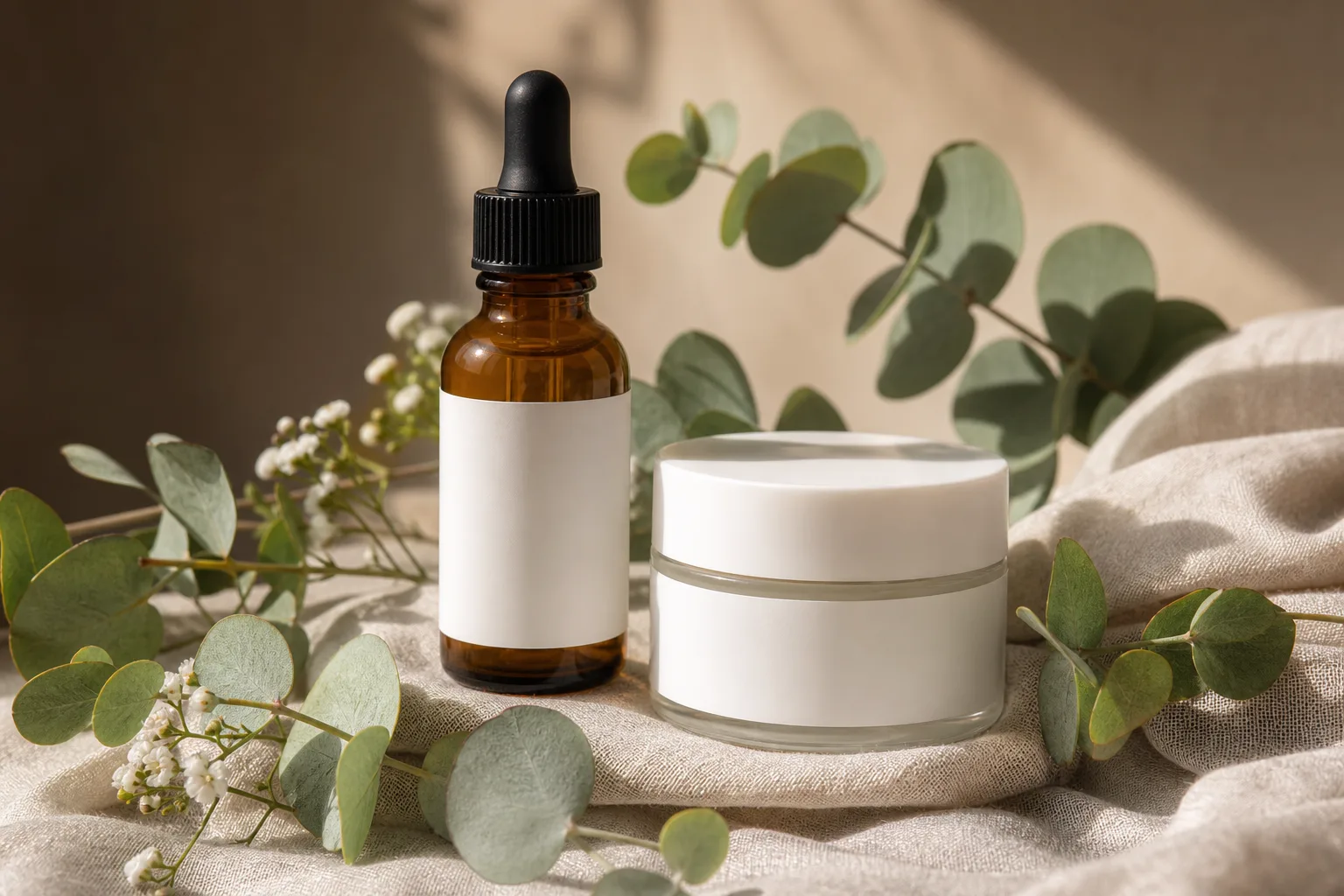
Product Guide
CBD lotions, salves, roll-ons, and bath bombs — which actually work, which are scams, and the dosing logic that separates marketing from medicine.
Wellness
Lotions, balms, salves, roll-ons, bath bombs — the CBD topical market is overwhelming. Here's the honest guide to format, dose, and which products are worth the money.
Your skin has its own endocannabinoid system, with CB1 and CB2 receptors distributed throughout the epidermis and dermis. When you apply CBD topically, it interacts with these local receptors plus other skin receptors (TRPV1 for pain and heat perception, PPAR-gamma for inflammation) without meaningfully entering the bloodstream. This makes topicals uniquely suited for localized issues: the sore joint, the sunburned shoulder, the bug bite, the aching muscle.
What topicals will not do: they won't help with anxiety, full-body inflammation, or systemic pain. They're a targeted tool, not a systemic treatment. Choose topicals for localized issues; choose oral CBD (gummies, tinctures, capsules) for systemic issues. Combining both is the most effective approach for whole-body recovery.
Water-based, light texture, absorbs in 30-60 seconds, no greasy residue. Best for: large areas (back, legs, full arms), facial application, sunburn coverage, daily use. Look for 100-500 mg CBD per ounce, plus complementary ingredients like aloe, shea butter, or hyaluronic acid. Avoid formulations with synthetic fragrance or alcohol-based preservatives, which can dry out the skin.
Wax-based (typically beeswax), thicker than lotion, stays on the skin surface for hours. Best for: targeted application to specific spots (knees, elbows, lower back, sore spots), pre-workout prep, post-sunburn spot treatment. The wax creates a protective barrier that allows slow CBD release over several hours. The trade-off is greasiness and a slight visible residue. Apply before bed or under clothing.
Oil-based, similar to a balm but with a softer consistency. Best for: similar applications to balms, with easier spreadability. Often formulated with added essential oils (lavender, eucalyptus, peppermint) for scent and additional therapeutic effects. The essential oils are nice for some users and irritating for others. Patch-test first if you have sensitive skin.
Liquid or gel in an applicator stick, similar to a deodorant. Best for: on-the-go application, gym bag, beach bag, travel. The roll-on format is mess-free and doesn't get on your hands. Often formulated with menthol or capsaicin for immediate cooling or warming sensation. Good for acute post-workout soreness.
Thicker than lotion, more emollient. Best for: dry skin, mature skin, areas needing extra moisturizing. Often formulated with shea butter or cocoa butter. The texture is somewhere between a lotion and a balm.
Bath bombs, bath salts, and bubble baths infused with CBD. The marketing is strong; the science is mixed. CBD doesn't absorb well through intact skin in the brief 20-30 minute bath timeframe, so most of the CBD is going down the drain. The other ingredients (Epsom salts, essential oils) may provide the relaxation benefit, not the CBD specifically. Fun, not a serious therapeutic option.
Adhesive patches applied to the skin that deliver CBD transdermally over 8-24 hours. Some formulations are designed to reach the bloodstream (transdermal) and may produce systemic effects, similar to a nicotine patch. More expensive ($15-$30 per patch) and less commonly available, but the steady-state delivery can be useful for chronic localized pain.
Most OBX hemp shops carry a strong selection of CBD topicals. We typically see:
Most shops let you smell and (sometimes) sample the products before buying. Ask the budtender what they personally use for what — most are happy to share their favorites.
CBD topicals are a useful, low-risk tool for localized issues. They won't work miracles, but for sunburn, sore muscles, joint pain, and irritated skin, the evidence is reasonably positive. Choose the format for the use case (lotion for large areas, balm for targeted spots, roll-on for on-the-go), look for products with 100-500 mg CBD per ounce and third-party COAs, and combine with oral CBD for systemic effects. They're a great addition to a beach-week wellness kit and won't show up on a drug test.
CBD gummies, oils, topicals, and pet products. Broad-spectrum and isolate.
OBX20Shop JustCBD →We earn a commission — at no extra cost to you. Disclosure
🌿 Gear up: High Tide beach towel — $39
Quick answers
For localized issues (joint pain, muscle soreness, skin inflammation), the evidence is reasonably positive. CBD interacts with cannabinoid receptors in the skin, plus TRPV1 receptors involved in pain and inflammation perception. It will not enter your bloodstream in meaningful amounts, so it will not help with systemic issues like anxiety or full-body inflammation. Used as a localized treatment, it has real, if modest, effects.
Lotions are water-based, lighter, absorb quickly, good for large areas. Balms are wax-based (often beeswax), thicker, stay on the skin longer, good for targeted application. Salves are similar to balms but typically oil-based, often with a softer consistency. For sunburn, a lotion is easier to spread over a large area. For a sore knee, a balm or salve stays put better. For a face, a lightweight lotion is best.
Look for 100-500 mg of CBD per ounce as a reasonable therapeutic range. Below 100 mg per ounce is probably too dilute to do much. Above 1000 mg per ounce is premium but the dose-response curve flattens — more isn't always better. For a 2 oz jar at 300 mg, you're getting about 4-5 mg per application if you use a quarter-teaspoon. That's a reasonable localized dose.
No. Topical CBD does not meaningfully enter the bloodstream. The skin is an effective barrier for cannabinoids. Even full-spectrum topicals with trace THC will not trigger a positive urine test because the THC is not absorbed systemically. This is one of the few reliable ways to use CBD products if you face drug testing.
Generally yes, but check the other ingredients. Some CBD topicals contain menthol, capsaicin, or essential oils that can irritate sensitive skin. For facial use or sensitive areas, choose a fragrance-free formulation with minimal ingredients. Always patch-test a new topical on a small area first.
Explore by Town