Your cart is empty
Start shopping to add items to your cart
Cannabis Science
Same molecule, one carboxyl group apart. Here is why one is federally legal hemp and the other is the compound every drug test on Earth is looking for.
Cannabis Science
THCA and Delta 9 THC are nearly the same molecule — but one is federally legal hemp and the other is the compound every drug test on Earth is looking for. Here's the science, the law, and which one you should buy in North Carolina.
THCA (tetrahydrocannabinolic acid) is the raw, unheated form of THC found in fresh cannabis. Delta 9 THC is what THCA becomes when you heat it. They are essentially the same molecule with one extra carboxyl group attached, but that small difference changes everything: legality, drug-test detection, psychoactive effect, and how they're sold.
On the OBX you'll see both. THCA flower looks and smells like dispensary marijuana and is sold as "hemp" because the unheated bud has under 0.3% Delta 9 THC. Delta 9 gummies are made by extracting or synthesizing Delta 9 from hemp and infusing it into a gummy. Both are legal under the 2018 Farm Bill — for now. A federal rule change in November 2026 will reshape this market.
Cannabis plants don't actually make Delta 9 THC. They make THCA — the acid form, with an extra carboxyl group (COOH) attached. This group makes THCA too large and polar to bind effectively to your CB1 receptors, which is why raw cannabis won't get you high. Heat (around 220°F / 105°C for 30-60 minutes, or instant flame) drives off that carboxyl group as CO2, leaving behind Delta 9 THC. This process is calleddecarboxylation, or "decarb" for short.
When you smoke a joint, the lighter does the decarb in milliseconds. When you bake edibles, you do it in the oven before mixing into butter or oil. When you vape THCA concentrate, the heating element does it on demand. Every method of "getting high" is really just a different way of converting THCA → Delta 9.
A typical OBX THCA flower tests at 20-30% THCA. After decarb, that becomes roughly 17-26% Delta 9 THC — comparable to or higher than most legal dispensary flower in adult-use states. A 1-gram joint of 25% THCA flower contains 250 mg of THCA, which decarbs to about 218 mg of active Delta 9. That is an enormous dose by edible standards (a 10 mg edible is considered a standard single dose). The body processes inhaled and ingested THC very differently, which we'll get to.
The 2018 Farm Bill defined hemp as cannabis containing no more than 0.3% Delta 9 THC by dry weight. Note the specificity: Delta 9, not THCA. The bill did not mention THCA, so the loophole emerged: breeders grew strains with negligible Delta 9 but sky-high THCA, and the unheated bud stayed under the 0.3% Delta 9 threshold. Heat it, smoke it, and you have what is functionally marijuana — sold legally as hemp.
North Carolina has its own hemp program (the NC Industrial Hemp Pilot Program, expanded under S.B. 455 in 2022), but it aligns with the federal definition. NC does nothave recreational marijuana. Everything you see in OBX shops is hemp-derived, meaning it either contains under 0.3% Delta 9 by weight (flower, most vapes) or is a product infused with hemp-derived Delta 9 (edibles, drinks, capsules).
The catch: the DEA's new Total THC rule, effectiveNovember 12, 2026, redefines "hemp" to include THCA in the 0.3% calculation. Under the new rule, most current THCA flower would test well over the limit and become federally illegal. This is what the hemp industry calls "the cliff." Our full guide to the cliff explains what changes, what's exempt, and what to buy now.
Here is where people get confused. THCA and Delta 9 are pharmacologically equivalent once THCA is decarbed. The difference in felt effects comes down to:
This is the practical question. Here is the decision tree we'd give a friend visiting for the first time:
Start with a 5 mg Delta 9 gummy or a low-dose drink. Wait two full hours before taking more. Don't mix with alcohol. Don't drive. If you feel nothing, try 5 mg more the next day. You can always take more; you can never take less.
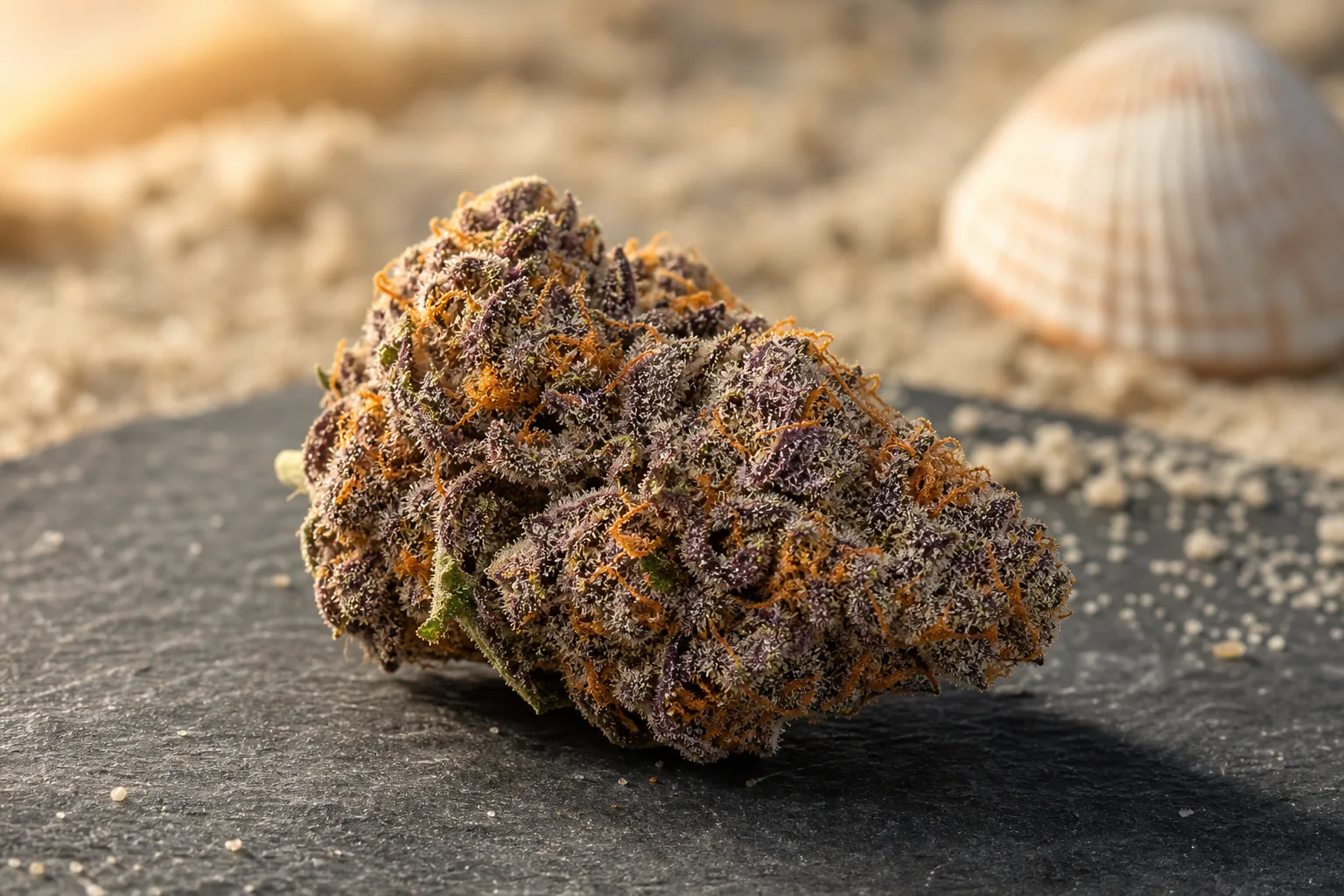
A THCA pre-roll (joint) is the closest analog to dispensary flower. Most OBX shops carry 1-gram pre-rolls in the $12-$20 range. Look for strains with named genetics (Gelato, Wedding Cake, Runtz, etc.) — these are actual cultivars, not random hemp.
A CBN + Delta 9 gummy (often labeled "Sleep" or "Nighttime"). CBN is mildly sedating on its own and synergizes with Delta 9. Take 30-60 minutes before bed.
CBD. Gummies, tinctures, topicals. Won't show up on drug tests (with verified THC-free products). See our CBD for Beach Week guide.
THCA diamonds / sauce / live rosin. These are concentrates in the 70-95% THCA range. Sold as dabs or in vape cartridges. Expensive ($40-$80 per gram), very potent. Not for beginners. Also potentially the first category to go away under the November 2026 hemp cliff.
From the OBX Cannabis Store
Gear Up for the Banks
Hemp-leaf tees, hoodies, beach towels, and stickers from the OBX Cannabis store — designed on the Outer Banks, printed on demand, and shipped to your door.
Shop the Store →Three scenarios people ask about:
Standard 5-panel and 10-panel urine tests look for THC-COOH, the metabolite of Delta 9 THC. Both THCA (post-decarb) and Delta 9 produce it. CBD-only products with a lab-verified Certificate of Analysis (COA) showing 0% THC are the only hemp options that consistently pass. Even broad-spectrum CBD carries some risk of trace THC accumulation with chronic use.
TSA's official position is that they don't search for cannabis, but they will report it to local law enforcement if found. Hemp-derived products (including THCA flower) are legally distinct from marijuana, but TSA officers aren't chemists. Practical advice: don't fly with THCA flower or concentrates. CBD gummies and Delta 9 gummies (under federal hemp limits) are generally fine in original packaging. Don't fly with anything you're not willing to lose.
Federal law applies at state borders. Even if a product is legal in both NC and your destination, transporting it across state lines technically invokes federal jurisdiction. In practice, this is rarely enforced for small personal amounts of legal hemp products. Don't be the test case.
Hemp shop quality varies wildly. Signs of a good shop:
See our Kill Devil Hills shop guide and Nags Head shop guide for specific recommendations.
THCA and Delta 9 are the same molecule, separated by one carboxyl group and one trip through a lighter. The legal distinction is real (for now) and the felt effects are different mostly because of how they're delivered. Buy what fits your experience and your goals, check the COA, and don't drive. The Outer Banks is a beautiful place to enjoy a legal high — keep it responsible.
Delta-8/Delta-9/THCA flower, gummies, vapes, and concentrates. Ships to NC.
OBX20Shop D8 Super Store →We earn a commission — at no extra cost to you. Disclosure
🌿 Gear up: Outer Banks × Hemp Compass tee — $29
Quick answers
Yes. THCA converts to Delta 9 THC when heated, and standard drug tests detect Delta 9 metabolites. If you face drug testing for work, probation, sports, or military, do not use THCA flower, vapes, or dabs. CBD-only products with 0% THC are the only legal-hemp option that generally passes, and even those carry some risk of trace-THC contamination.
Yes, for now. THCA flower and concentrates are sold legally in NC under the 2018 Farm Bill loophole: hemp is defined as cannabis with under 0.3% Delta 9 THC by dry weight, and THCA is not counted. A federal rule taking effect November 12, 2026 will change this — see our guide to the hemp cliff.
Roughly 1 mg of THCA decarbed equals 0.87 mg of active Delta 9 (the rest is lost as a carboxyl group). For practical purposes, a 25% THCA flower joint delivers about 50-80 mg of total THC potential — far more than a 10 mg Delta 9 edible. Edibles and inhalables are dosed differently; start low and go slow with either.
No, not in any practical way. Raw THCA has very low affinity for CB1 receptors. You would have to eat enormous quantities of raw cannabis (or use a raw tincture) to feel any effect, and even then it is mild. The high comes from heating — smoking, vaping, or baking — which converts THCA to Delta 9 via decarboxylation.
Chemically, yes. Delta 9 THC is the primary psychoactive compound in marijuana. Hemp-derived Delta 9 gummies are made by extracting or synthesizing Delta 9 from hemp (legally defined as under 0.3% Delta 9 by dry weight) and infusing it into gummies. The molecule is identical to what you would get at a Colorado dispensary; the legal distinction is the source plant and the per-weight concentration.
Depends on what you want. For a controllable, predictable, low-key experience: Delta 9 gummies (5-10 mg). For a more traditional cannabis experience that feels like dispensary weed: THCA flower. For non-psychoactive wellness: CBD. For sleep: CBN + Delta 9 gummies. For daytime focus: THCV or CBG. Most OBX shops carry all of the above.
Explore by Town