
Your cart is empty
Start shopping to add items to your cart
Cannabis Science
Myrcene, limonene, pinene, caryophyllene — these aromatic molecules drive the high more than THC percentage ever did.
Cannabis Science
Two strains with identical THC percentages can feel completely different. The difference is terpenes — the aromatic compounds that give cannabis its smell and shape its effects. Here's the practical guide.
Terpenes are volatile aromatic compounds produced by plants (and some insects). They're the reason lavender smells floral, lemons smell citrusy, and cannabis smells like, well, cannabis. In nature, terpenes evolved to attract pollinators, repel herbivores, and protect against UV radiation and fungal infection.
Cannabis produces over 200 different terpenes, though only about 20-30 appear in concentrations high enough to shape the effects. The combination of terpenes in a given strain is called the "terpene profile" or "chemotype," and it's a far better predictor of how a strain will feel than the Indica/Sativa label.
Aroma: Earthy, musky, clove-like, sometimes mango.
Effects: Sedative, muscle-relaxing, "couch-lock."
Found in: Mango, hops, thyme, lemongrass.
Myrcene is the most common terpene in modern cannabis. Strains with more than 0.5% myrcene tend to feel sedating and body-heavy. The "Indica" experience, as most people think of it, is largely a myrcene experience. If you want to sleep or relax deeply, look for high-myrcene strains. If you want to be functional, look for low-myrcene.
Aroma: Citrus, lemon, orange.
Effects: Uplifting, mood-enhancing, anti-anxiety, may help with depression.
Found in: Citrus peels, juniper, peppermint.
Limonene is the second most common terpene. It gives strains a bright, cheerful, slightly euphoric quality. People who say "Sativa makes me happy" are usually responding to limonene. Also being studied for anti-anxiety and antidepressant properties — early research is promising.
Aroma: Pine, fresh, sharp.
Effects: Alert, focused, may counteract short-term memory impairment from THC.
Found in: Pine needles, rosemary, basil, dill.
Pinene is interesting because it's been shown in animal studies to counteract some of THC's negative cognitive effects, particularly short-term memory impairment. Strains with high pinene are popular for daytime use and creative work. Also has anti-inflammatory and bronchodilator properties (opens airways, which is relevant if you're smoking rather than vaping).
Aroma: Pepper, spice, woody.
Effects: Anti-inflammatory, analgesic, stress-relief. Unique in that it directly binds to CB2 cannabinoid receptors.
Found in: Black pepper, cloves, cinnamon.
Caryophyllene is the only terpene that also acts as a cannabinoid, binding to the same receptors as THC (specifically CB2, which is more involved in inflammation and immune response than psychoactivity). This is why caryophyllene-rich strains and products can feel genuinely anti-inflammatory. Good for chronic pain, stress, and post-exercise recovery.
Aroma: Floral, lavender, sweet.
Effects: Anxiolytic, sedative, anticonvulsant.
Found in: Lavender, mint, cinnamon.
Linalool is what makes lavender calming. In cannabis, it adds a gentle, anti-anxiety, sedating quality. Good for sleep, anxiety, and stress. Often paired with myrcene in "sleep" formulations.
Aroma: Earthy, woody, hoppy.
Effects: Anti-inflammatory, appetite-suppressant (unusual for a cannabis terpene), energizing.
Found in: Hops, sage, ginseng.
Humulene is one of the few cannabis compounds that doesn't increase appetite — it actually suppresses it. If you want the high without the munchies, look for high-humulene strains. Also has anti-inflammatory properties.
Aroma: Floral, herbal, piney, citrusy (complex).
Effects: Mildly sedating, mildly uplifting, complex; less predictable than the others.
Found in: Lilacs, nutmeg, tea tree, apples.
Terpinolene is found in fewer strains but is prominent in so-called "Sativa" classics like Jack Herer and Durban Poison. Effects are nuanced — mildly uplifting but with a relaxed undertone. Not as well-studied as myrcene or limonene.
The "entourage effect" is the theory that cannabis compounds work better together than in isolation. It's why whole-flower THCA feels different from pure-THC distillate, and why full-spectrum CBD extracts are often more effective than CBD isolate. The exact mechanisms are still being studied, but the practical takeaway is clear:
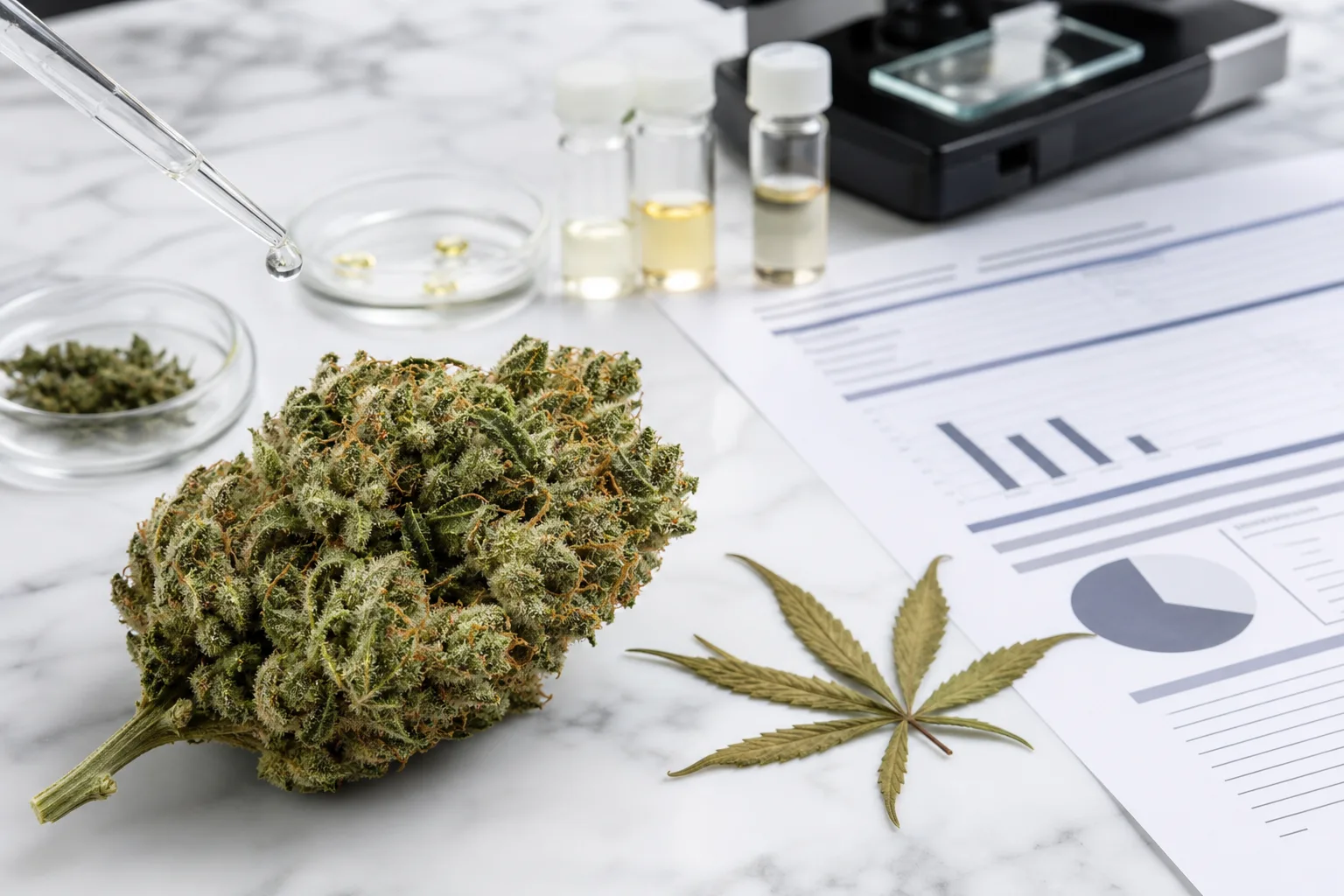
The Certificate of Analysis from a third-party lab tells you the actual terpene profile of the product you're about to buy. Look for:
From the OBX Cannabis Store
Gear Up for the Banks
Hemp-leaf tees, hoodies, beach towels, and stickers from the OBX Cannabis store — designed on the Outer Banks, printed on demand, and shipped to your door.
Shop the Store →Skip the Indica/Sativa label. Use terpenes instead.
Most OBX shops display COAs for their THCA flower and concentrate products. Ask to see the terpene profile before you buy. A budtender who can walk you through the top three terpenes in a strain is a budtender worth trusting.
For gummies and edibles, the terpene story is more complicated — many are distillate-based with added terpenes, and the profile is less consistent. Full-spectrum gummies (made with whole-plant extract rather than distillate) preserve more of the original terpene spectrum. They're slightly more expensive but the effect is noticeably richer.
Terpenes are the unsung heroes of the cannabis experience. Two strains with identical THC content can produce genuinely different effects based on their terpene composition. Learn the seven major terpenes, look at the COA before you buy, and shop based on the effect you want, not the strain name. The Indica/Sativa distinction is mostly marketing in 2026; the terpene profile is the truth.
Quick answers
Close but not quite. Terpenes are the natural compounds in living plants. Terpenoids are what they become after being modified by oxidation, heating, or chemical processing during drying and curing. In cannabis, most of what's left after curing is technically terpenoids, but the terms are used interchangeably in the industry.
No, not in any significant way. Terpenes are aromatic compounds, not psychoactive. But they modulate the effects of THC and other cannabinoids through what's called the "entourage effect" — meaning the same dose of THC can feel different depending on the terpene profile. A high-myrcene strain tends to feel more sedative; a high-limonene strain tends to feel more uplifting. The THC is the same; the experience differs.
Impossible to say — they all contribute. But for cannabis specifically, the four most-studied and most-impactful are myrcene (sedative, "couch-lock"), limonene (uplifting, mood-enhancing), pinene (alert, focus, counteracts some THC-induced short-term memory loss), and caryophyllene (anti-inflammatory, stress-relief, the only terpene that also binds to cannabinoid receptors).
A reputable shop has a COA (Certificate of Analysis) for each product batch. The COA will list the top 5-10 terpenes and their percentages. If the shop or brand doesn't have COAs, the terpene info is guesswork. On packaging, look for "total terpenes" as a percentage — 1-3% is typical, 3%+ is high. Below 0.5% and the product was probably over-processed.
Honestly, not really — and certainly not in 2026. Modern cannabis is almost entirely hybrid, and the actual effects depend on the specific cannabinoid and terpene profile, not the "Indica/Sativa" label. A heavy Indica with high limonene can feel uplifting. A Sativa with high myrcene can be sedating. Ignore the labels; look at the COA.
Explore by Town